Chapter 4
Part 4
After college, I moved into an apartment above a laundromat where the walls sweated in July and smelled like dryer sheets in winter.
The floors sloped so badly that if I dropped a pen, it rolled toward the bathroom. I owned two plates, one saucepan, and a thrift-store couch that scratched the backs of my legs. Still, I loved that place. It was mine. Nobody could knock on the door and tell me I owed them rent for the privilege of breathing.
My first job paid less than I pretended. I wore blazers from clearance racks and kept a pair of heels under my desk because the ones I wore on the bus got ruined in rain. Every Friday, I allowed myself one expensive coffee. Every Sunday, I called my grandmother’s old number and listened to the disconnected tone for three seconds before hanging up.
Then my father’s hardware store had a bad winter.
It began with a phone call from my mother.
“The electric bill is late,” she said.
I was standing in the frozen-food aisle at Kroger, comparing prices on store-brand vegetables.
“How late?”
She sighed like my question hurt her. “Late enough that your father is embarrassed.”
That was all it took then. Their embarrassment had always been my emergency.
I paid the bill.
Then I paid another.
Then I paid the phone line for the store because Dad said customers couldn’t call in orders. I paid the overdue supplier balance once because my mother cried and said the town would talk. I paid their car insurance one month because Beck needed rides to basketball practice and my father said I was being selfish if I let the policy lapse.
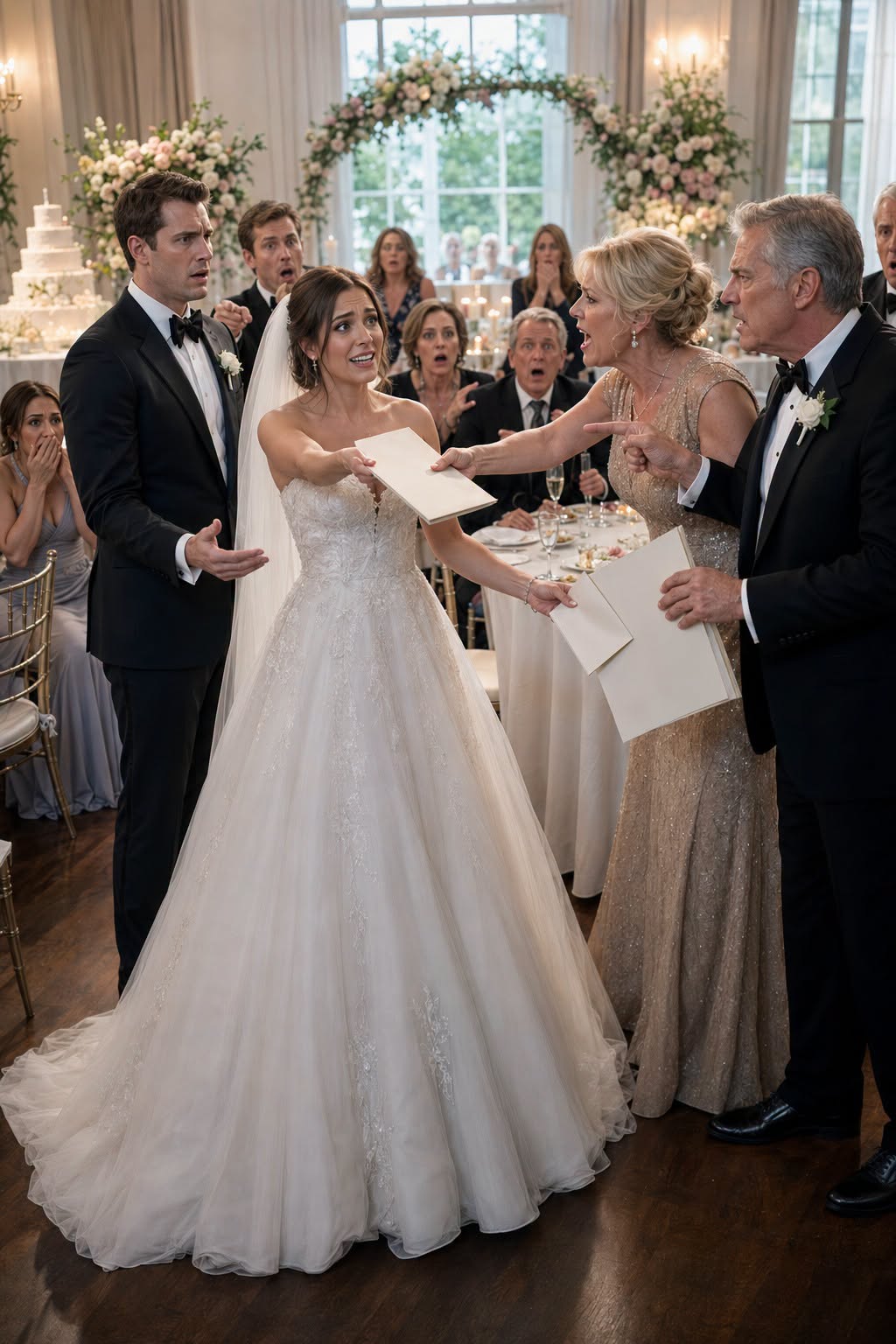
At my wedding, I lifted the bank statements one by one.
“Eighteen months of documented utility and business support,” I said. “Not loans. I was never repaid, and I never asked.”
My father finally stepped away from the microphone. He no longer seemed interested in performing.
“That was private,” he hissed.
“So was my childhood,” I said. “Until you itemized it in front of my guests.”
Callum’s hand found mine under the table. His palm was warm. Mine was ice-cold.
My mother looked around, suddenly aware of every eye. “We were struggling.”
“I know,” I said. “That is why I helped.”
“You’re making it sound ugly.”
“No,” I answered. “You made help ugly when you called it debt.”
She flinched, but only for a second. My mother recovered quickly. She had survived for decades by turning every accusation into an injury against herself.
“We gave you life,” she said.
A chair scraped somewhere in the back. Callum’s sister muttered something I couldn’t hear.
I folded the statement and set it down.
“And I spent years trying to be grateful enough for that life,” I said. “But gratitude is not supposed to be a payment plan.”
I moved to the next section.
Grandma Odessa.
The room softened when her photograph appeared. Even my father looked away.
In the picture, she was sitting in her floral armchair with a crocheted blanket over her knees. I was beside her, younger and thinner, my hair falling out of a messy bun, both of us laughing at something outside the frame.
“For seven months,” I said, “I cared for Grandma Odessa after work.”
My father barked, “Don’t drag my mother into this.”
That was the first time anger cracked my calm.
“You dragged your mother into this when you included family vacations and lunch money on an invoice,” I said. “You don’t get to decide which memories count.”
The microphone picked up the sharpness in my voice. I heard it echo lightly through the speakers.
I took a breath.
“I’m not listing this because I regret loving her,” I said. “I don’t. Those evenings with her were some of the only peaceful parts of my twenties.”
For a moment, I was back in that yellow house, hearing the hum of the refrigerator and the soft tick of the kitchen clock. Grandma’s hands smelled like lavender lotion. She liked her tea lukewarm and her toast almost burned. Some nights she knew exactly who I was. Some nights she called me by my mother’s name and cried because she thought she had forgotten to pick me up from school.
I never told my father those details. He wouldn’t have known what to do with tenderness he couldn’t spend.
“I missed work events,” I continued. “I used vacation days. I drove back and forth after twelve-hour days. I bought groceries, paid for supplies, cleaned, cooked, and sat beside her when she was afraid.”
My aunt Junie began crying silently.
My father stared at the floor.
“Grandma kept records,” I said.
His head snapped up.
That was the first real clue I had not meant to reveal so early. I saw panic flicker across his face, quick as a match.
My mother saw it too.
“What records?” she asked.
I looked at the green recipe box sitting open beside my envelope. I had brought it wrapped in a linen napkin, tucked into a tote bag behind the head table. Until that second, no one had noticed.
I touched the lid.
“Enough,” I said.
My father’s face changed in a way I had seen only twice before. Once when a bank letter arrived certified. Once when Grandma Odessa asked him why Arden was paying bills a child should never carry.
He reached toward the box.
Callum moved first. Not aggressively. Just enough to place his body between my father’s hand and the table.
“Don’t,” Callum said.
One word. Quiet. Final.
My father froze.
May you like



The ballroom held its breath.
And for the first time all day, my mother looked afraid.







