Chapter 3
Part 3
When I was fourteen, I knew the sound of my brother’s school bus better than I knew my own friends’ voices.
It coughed at the corner at 3:18 every weekday, brakes squealing like an old screen door. I would already be waiting on the porch with my backpack still on, because if Beck got off the bus and nobody was there, he cried. He was six then, all knees, cowlicks, and dinosaur sneakers. My mother said he was sensitive. My father said boys toughened up eventually.
I made him grilled cheese. I checked his homework. I learned which cough meant he was faking and which cough meant he needed ginger ale and a blanket. I signed reading logs when my mother forgot. I washed grass stains out of his jeans before Dad could yell.
At the time, I thought every oldest daughter lived like that.
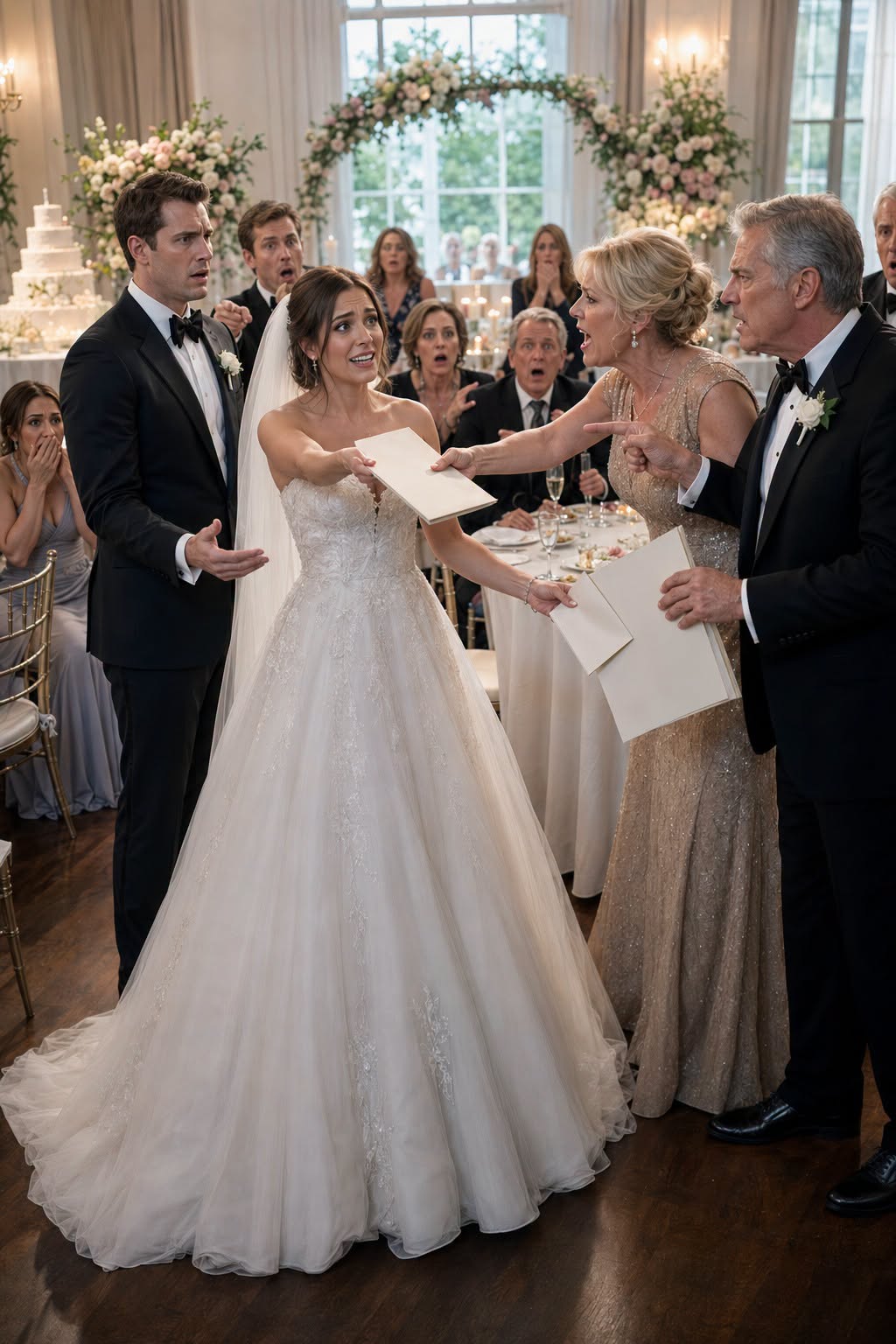
“This first section covers four years of after-school childcare,” I said into the microphone. “School pickups, meals, homework help, sick days, and weekends.”
My father let out a sharp breath. “You watched your brother. That’s what siblings do.”
I nodded. “I agree.”
That confused him.
“I agree completely,” I repeated. “That’s why I never billed you.”
The room stayed quiet.
I turned the page. “But since today you counted groceries, winter coats, birthday candles, and housing as debts I owe for being born, I used a standard local childcare rate and calculated only the hours I can document.”
My mother whispered, “Stop this.”
I looked at Beck.
He stood slowly from his chair. He was twenty-six now, tall and thin, with the same nervous habit of twisting his napkin that he’d had as a boy.
“She picked me up almost every day,” he said. His voice cracked, and he cleared it. “When I had the flu in second grade, Mom was at a salon appointment and Dad was at the store. Arden stayed home from school with me for three days.”
My father snapped, “Beck, sit down.”
Beck did not sit.
“I remember because she burned tomato soup and cried in the kitchen because she thought she was going to fail a biology test.”
A small sound moved through the room. Not laughter. Recognition.
I had forgotten that soup until he said it. Suddenly I could smell it again, sour and scorched, stuck to the bottom of a saucepan while Beck slept on the couch under my purple blanket.
I turned another page before memory could soften me too much.
“Age sixteen,” I said. “Summer employment at Wren Hardware.”
My father’s face flushed. “Family business.”
“Yes,” I said. “A family business where I worked forty hours a week for three summers without payroll records, while part-time employees my age earned minimum wage.”
“That money stayed in the household,” he argued.
“No,” I said quietly. “My labor stayed in the household. The money stayed with you.”
My uncle Dorian shifted in his chair. He owned a landscaping company and had always treated work like religion.
“Silas,” he said slowly, “you told me she was on payroll.”
My father’s eyes cut toward him. “Not now.”
But it was now. That was the thing about public cruelty. Once you open the door, you don’t get to decide which truths walk through it.
I held up photocopies of old schedules. The paper shook slightly, but my voice did not.
“I opened the store on Saturdays. I stocked shelves. I ran inventory. I handled returns. I missed two summer birthday trips because Dad said the store came first.”
My cousin Lark whispered, “I remember that.”
So did I. I remembered smelling like fertilizer, cardboard, and metal keys. I remembered older men calling me “sweetheart” while asking for plumbing parts. I remembered hiding in aisle six during my lunch break, eating crackers from a vending machine because I had forgotten to pack food and Dad said buying lunch made people lazy.
My mother lifted her chin. “You had a roof over your head.”
There it was again. The roof. The old family crown jewel. The thing they had provided because the law and decency required it, polished into a weapon.
“Yes,” I said. “And apparently today I was billed for it.”
A few guests shifted uncomfortably. My father glanced toward the invoice he had given me, as if wishing he could pull it back with his eyes.
I turned to the next section.
“Age nineteen. College.”
My mother straightened, relieved. She thought she knew this part. She had told people for years that they “put me through school,” even though the truth was more complicated and less flattering.
“My parents told me there wasn’t money for tuition,” I said. “So I applied for scholarships, worked evenings at the campus library, and cleaned offices on Sunday mornings.”
My mother interrupted, “We helped when we could.”
I nodded again. “You paid for one semester of used textbooks. I included that as a credit in your favor.”
That got a few startled looks.
My father looked almost triumphant until I continued.
“Three months after telling me there was no money for tuition, my parents remodeled their kitchen.”
The room changed temperature.
My aunt Junie whispered, “The granite counters.”
I placed a photograph on the head table. My parents standing in their new kitchen, smiling beside a double oven. I had taken that picture during Thanksgiving break, two days after I pawned a gold bracelet Grandma Odessa had given me because my rent was short.
My mother’s face went pale.
“That photo doesn’t prove anything,” my father said.
“No,” I replied. “But the contractor deposit paid from your checking account three months after my scholarship appeal does.”
The wedding photographer stood frozen near the cake, camera hanging at his chest. I suddenly wondered if he was capturing this. Then I realized I didn’t care.
I turned the page again.
The next section was smaller, but heavier.
“Age twenty-two through twenty-four,” I said. “Family support after graduation.”
May you like



My father’s eyes dropped.
That was how I knew he remembered.







