Chapter 6
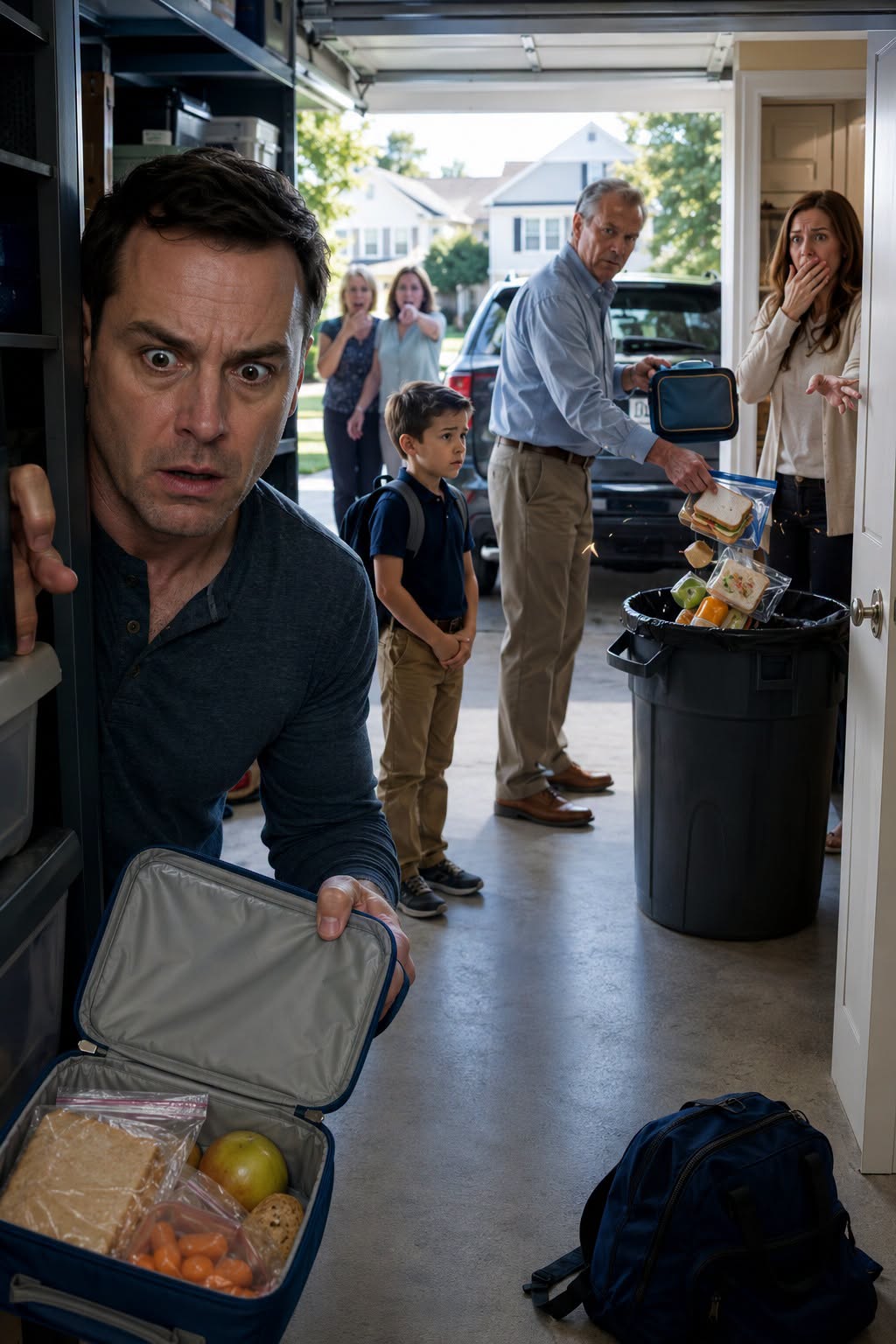
### Part 6
The school board’s statement was careful in the way institutions are careful when they smell smoke near their curtains.
They expressed concern. They respected due process. They were reviewing past records related to Thaddeus Rook’s tenure. They would cooperate with any lawful inquiry.
It sounded bland.
To me, it sounded like a door opening.
By Saturday morning, three former parents had emailed Sable.
One said Thaddeus had once told her twelve-year-old son that his mother was “limiting his potential” by refusing to place him in an advanced disciplinary program. Another said her daughter came home crying after Thaddeus told her divorce happened when mothers chose weak men. A third attached a scanned complaint from fifteen years earlier alleging that Thaddeus had pressured a student to contradict his parents during a school placement dispute.
None of the stories were exactly like ours.
All of them had the same fingerprint.
Authority dressed as concern.
Control disguised as wisdom.
Children treated as property waiting for the right owner.
I read the emails in my office while rain streaked down the windows. Nyra sat across from me, arms wrapped around herself.
“He has always been this way,” she said.
“Maybe.”
“And everyone called it standards.”
“That’s usually how it works.”
She shook her head slowly. “When I was fourteen, I wanted to quit debate team. I hated it. I used to get stomachaches before tournaments. Dad told me stress was proof that excellence was nearby.”
I waited.
“He drove me to a tournament after I threw up in the driveway.”
I said nothing, because some memories need silence more than outrage.
Nyra stared at the rain.
“I thought that was discipline.”
“It was control.”
Her eyes shone. “I married you because you never made love feel like a test.”
That one hurt in a tender place.
I reached across the desk and took her hand.
For the next two weeks, the investigation widened.
Child protective services interviewed us, Orson, Miss Crane, Dr. Bell, Thaddeus, and Evaleigh. Thaddeus tried to charm the investigator. It apparently lasted seven minutes before he began explaining that modern parents resented elder wisdom because they lacked moral structure.
The investigator had three children and no patience for speeches.
The final report substantiated emotional maltreatment and coercive conduct. It recommended continued no-contact and therapeutic support for Orson. It also noted that Evaleigh had failed to intervene despite awareness of the legal filing and unusual lunch routine.
That sentence devastated Nyra more than she expected.
Not because it was unfair.
Because it was accurate.
At home, Orson began healing in small, uneven ways.
The first time he ate his whole lunch again, Miss Crane sent us a message with three exclamation points and a photo of the empty lunchbox. I stared at that picture longer than any sane person would. Crumbs in a plastic container. A chocolate milk straw wrapper. Proof of ordinary safety.
At night, he still asked whether the doors were locked.
I told him yes every time.
Sometimes he asked twice.
I answered twice.
Healing is repetition without irritation.
One Thursday evening, he came into the garage while I was sanding the nose cone of his model rocket.
“Dad?”
“What’s up?”
“If someone says they love you but they scare you, is it still love?”
I set the sandpaper down.
“That’s a big question.”
He climbed onto the stool beside me.
“Dr. Bell says feelings can be mixed.”
“She’s right.”
“So Grandpa could love me and scare me?”
“Yes.”
His forehead wrinkled.
“But love doesn’t make scaring you okay,” I said. “Love is not a permission slip.”
He thought about that.
“Do I have to love him?”
“No.”
“Do I have to hate him?”
“No.”
“What do I have to do?”
“Be honest about how you feel. And let Mom and me handle the grown-up parts.”
He looked relieved.
Then he picked up the rocket body and said, “Can we paint it black and silver?”
“We can paint it any color you want.”
“Grandpa said rockets should be white because real rockets are white.”
I handed him the paint catalog.
“Then this one definitely won’t be.”
He grinned.
That grin felt like winning a case no court would ever understand.
But outside our house, the consequences kept moving.
The district removed Thaddeus’s portrait from the administration hallway. His emeritus title was suspended pending review. A scholarship named after him was renamed for a retired school librarian who, according to three hundred Facebook comments, had actually been kind to children.
Thaddeus appealed the protection order.
Then withdrew.
Then announced through a friend that he intended to sue for defamation.
Then did not.
Men like Thaddeus often threaten lawsuits the way dogs bark at windows. Noise feels like power until the door opens.
Behind the scenes, his finances started cracking.
That part I discovered by accident, then confirmed through public records. A home equity line. Legal bills. A lien connected to unpaid fees. Years of careful reputation had cost him nothing. Losing it cost him everything.
I did not celebrate.
But I did not mourn either.
One afternoon, Evaleigh called from an unknown number. I let it go to voicemail. Then Nyra and I listened together.
Her voice sounded thinner.
“Nyra, I know I’m not supposed to call. I’m sorry. I won’t call again after this unless your lawyer says I can. I just wanted you to know I moved out. I’m staying with Aunt Maris for now. Your father is angry all the time. He says you betrayed the family. I think… I think I did too, in a different way. I am sorry. I know sorry doesn’t fix it.”
Nyra sat very still.
“I hate that I want to call her,” she said.
“That doesn’t make you weak.”
“I know.”
“Do you want to?”
“No.”
I waited.
“Not yet.”
So she didn’t.
Two months after the first phone call from Miss Crane, we had our first quiet Saturday.
No filings. No interviews. No unexpected messages.
The morning was cold and sunny. Nyra made pancakes shaped vaguely like stars, though Orson said one looked like a damaged turtle. We laughed like a normal family, which felt almost suspicious.
At noon, Orson asked if we could go to the park.
He ran ahead on the path, kicking leaves, his red scarf trailing behind him. Nyra walked beside me with her hands in her coat pockets.
“I keep thinking about the first lunch,” she said.
“The first one he threw away?”
“No. The first one you packed after Orson was born.”
I smiled faintly. “He was six months old. He didn’t need lunch.”
“You packed mashed banana in a tiny container for daycare and labeled it like it was evidence.”
“It was his banana.”
“You were so nervous.”
“I still am.”
She leaned her shoulder into mine.
Across the park, Orson climbed to the top of the jungle gym and waved both arms.
For a second, sunlight hit his face and he looked exactly like a child should look.
Open.
Unburdened.
Free to be loud.
Then Nyra’s phone buzzed.
She checked it and stopped walking.
“What is it?” I asked.
She turned the screen toward me.
May you like



A message from Aunt Maris.
“Your father was taken to the hospital last night. Neurology consult. They found something.”







