“She slapped the girl in front of the police station… until the old case file was opened.”
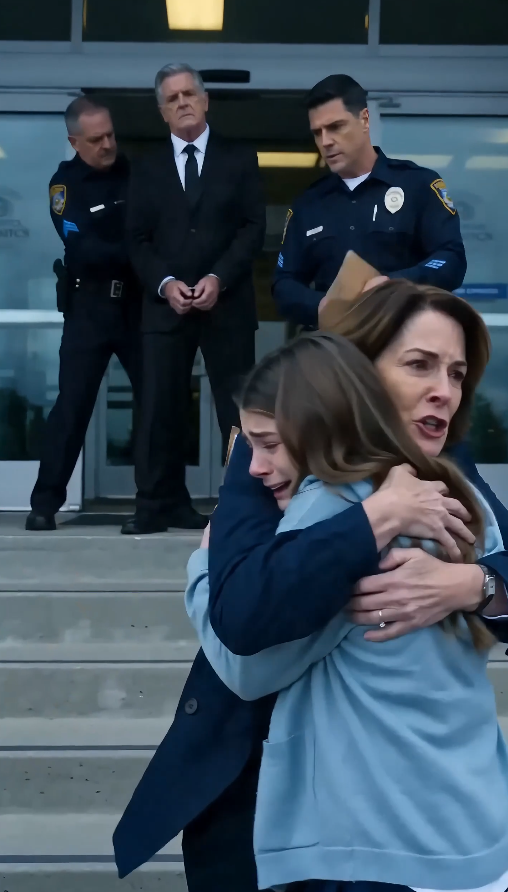
“You are not my daughter!”
Margaret Hale’s hand struck the young woman across the face before anyone outside the police station could stop her.
The sound snapped through the morning air.
Cars slowed at the curb.
Two officers near the entrance turned sharply.
The young woman stumbled backward, one hand rising to her reddened cheek, but she did not run.
She stood there with a thin folder clutched against her chest and tears already filling her eyes.
Margaret was shaking so badly that her pearl earrings trembled against her neck.
For twenty years, people had come to her with lies.
A birthmark copied from old news articles.
A necklace bought from an antique store.
A fake memory stolen from interviews she had given when grief still made her careless.
Every time, they said they were her missing daughter.
Every time, they took a little more money, a little more hope, and a little more of the woman Margaret had once been.
So when this girl appeared outside the police station holding a file and whispering the name Grace, Margaret broke.
The young woman lowered her hand from her cheek.
Her voice trembled, but she did not look away.
“Then why do I remember your lullaby?”
Margaret’s face twisted.
For one second, the anger almost collapsed into fear.
Then she laughed.
It was a hard, wounded laugh that sounded nothing like joy.
“Anyone could know a song.”
The girl swallowed.
“You used to sing it when I couldn’t sleep.”
Margaret stepped toward her again.
“No.”
“You read that somewhere.”
The young woman shook her head.
“No one printed the second verse.”
Margaret froze.
The officers stopped moving.
Even the pedestrians near the steps became still.
The girl’s lips trembled as she sang under her breath.
“When the moon forgets the river, little bird, I’ll find you still.”
Margaret’s breath disappeared.
That line had never been in newspapers.
It had never been in interviews.
It had never been written in Grace’s nursery book.
Margaret had made it up one night when her baby daughter would not stop crying during a thunderstorm.
She had sung it only in the blue nursery on the second floor of the Hale mansion.
She had sung it with Grace’s tiny fist wrapped around her finger.
The memory hit Margaret so violently that she had to reach for the iron railing beside the station door.
The girl took one small step forward.
“My name is Lena Brooks.”
“But I think it used to be Grace Hale.”
Margaret shook her head as tears gathered despite her fury.
“My daughter died.”
Lena whispered, “Did you see her body?”
The question was not cruel.
That made it worse.
Margaret’s eyes flashed.
“I buried her shoes.”
“My husband buried her blanket.”
“The police closed the case.”
Lena’s voice broke.
“But did you see her?”
Before Margaret could answer, the station door opened behind her.
Detective Aaron Ruiz stepped out carrying a brown archival box beneath one arm.
His expression was grim.
“Mrs. Hale.”
Margaret turned sharply.
“What is that?”
Ruiz looked from her to Lena.
Then he looked at the red mark on Lena’s cheek.
“We found something in the kidnapping file.”
Margaret’s voice became thin.
“What file?”
Detective Ruiz did not answer immediately.
He placed the box on the hood of a patrol car parked near the steps.
The cardboard was old and soft at the corners.
Across the lid, someone had written in fading black marker:
HALE, GRACE.
MISSING CHILD.
APRIL 18.
Margaret stared at the label as if the box might breathe.
“That file was sealed.”
“It was,” Ruiz said.
“Until Miss Brooks brought us this.”
Lena opened the folder she had been holding and removed a small photograph.
It showed a toddler with dark curls sitting beside a white piano.
The little girl wore a yellow dress and one tiny bracelet.
Margaret’s mouth parted.
“That picture was in my bedroom.”
Lena nodded.
“It was hidden inside the lining of the suitcase I grew up with.”
Margaret reached for the photo, then stopped herself.
She was terrified that touching it would make the impossible real.
Ruiz opened the archival box.
Inside were old reports, faded photos, evidence envelopes, and a cassette tape sealed in yellowing plastic.
Margaret saw the top report and felt the sidewalk tilt beneath her.
There was her husband’s signature.
There was the original ransom note.
There was the inventory of Grace’s recovered belongings.
Ruiz lifted one folder.
“Twenty years ago, investigators believed the kidnapper acted alone.”
“They found Grace’s blanket near the river.”
“They found one shoe.”
“They found blood on a wooden bridge.”
Margaret closed her eyes.
“I know.”
Ruiz’s voice remained careful.
“The blood was retested last month.”
Margaret opened her eyes.
“It was not Grace’s.”
The street seemed to lose all sound.
Lena covered her mouth.
Margaret stared at Ruiz.
“What did you say?”
“The sample was contaminated in the original lab.”
“Modern testing found two profiles.”
“One belonged to a man already in your household database.”
Margaret whispered, “Household database?”
Ruiz looked past her.
A black sedan had stopped across the street.
An elderly man in a gray coat stood beside it, watching the scene unfold.
His name was Harold Finch.
For twenty years, he had served as Margaret’s housekeeper, driver, secretary, and quiet companion through grief.
He had arranged Grace’s memorial.
He had handled the reporters.
He had brought Margaret tea during panic attacks.
He had reminded her every year to place white lilies beside the empty grave.
Now his face was pale.
Ruiz said, “Harold Finch.”
Margaret turned slowly.
Harold did not move.
The man who had lived inside her home for two decades looked suddenly unfamiliar.
“Harold?” she whispered.
He gave a gentle smile.
“Margaret, don’t listen to this.”
His voice was calm.
Too calm.
“This young woman is manipulating you.”
Ruiz took another document from the file.
“The blood sample from the bridge matched Harold Finch.”
Harold’s smile faded.
Margaret stepped backward.
“No.”
Harold looked wounded in exactly the way he had always looked when Margaret doubted him.
“You know me.”
“I stood by you when everyone else left.”
Ruiz said, “You stood close enough to bury the truth.”
Harold’s eyes sharpened.
The kindness disappeared so quickly that Margaret wondered how many years she had mistaken discipline for devotion.
Lena looked at him.
“Do you know me?”
Harold did not answer.
That silence was the second confession.
Ruiz opened another evidence envelope.
Inside was a small hospital bracelet.
The name printed on it had been scratched but not fully erased.
GRACE HALE.
Lena began to cry.
Margaret reached for the bracelet with a sound that was almost a gasp.
Ruiz held it gently but did not give it to her yet.
“This was recovered last week from a storage unit rented under one of Mr. Finch’s aliases.”
Margaret turned on Harold.
“You told me everything was gone.”
Harold’s jaw tightened.
“I protected you.”
Margaret’s voice rose.
“From my daughter?”
Harold looked at Lena with disgust.
“From scandal.”
“From vultures.”
“From a child who would have destroyed everything your husband built.”
Margaret stared at him.
“My husband?”
Ruiz took out a final folder.
“This is the part we needed to confirm before speaking to you.”
He opened it.
Inside were bank records, adoption forms, and a photograph of a younger Harold standing beside a woman Margaret did not recognize.
Lena’s hands began shaking.
“That’s the woman who raised me.”
“Evelyn Brooks.”
Ruiz nodded.
“She was not your biological mother.”
“She was paid through a shell account connected to Finch.”
Lena closed her eyes.
Margaret looked from the photo to Harold.
“You gave my child away.”
Harold’s face hardened completely.
“Your husband ordered me to handle a problem.”
Margaret’s breath caught.
For twenty years, she had believed her husband Thomas Hale died of a heart attack while still grieving their daughter.
She had believed sorrow killed him.
Now Ruiz turned a page.
“There is no evidence Thomas arranged the kidnapping.”
Harold’s lips pressed together.
“But there is evidence Mr. Finch wanted you to believe that.”
Margaret looked at him.
“What?”
Ruiz continued.
“Thomas Hale changed his will two weeks before Grace disappeared.”
“He left controlling shares of the Hale estate in trust for Grace.”
“If Grace was declared dead, control passed temporarily to you.”
“But if you became emotionally incapacitated, financial management transferred to the household administrator.”
Margaret whispered, “Harold.”
Ruiz looked directly at Finch.
“You were named household administrator.”
Harold’s face no longer resembled the man who had poured her tea.
“You were unfit.”
Margaret flinched.
He stepped forward.
“You cried for months.”
“You refused meetings.”
“You would have let the estate collapse over a child too young to remember you.”
Lena’s voice broke.
“I remembered her.”
Harold turned on her.
“You remembered what Evelyn let you remember.”
Margaret saw the truth then.
Not all at once.
But enough.
Harold had not been a servant.
He had been a jailer with keys to every room in her life.
He had filtered her mail.
Managed her calls.
Chosen which detectives could reach her.
Turned away strangers.
Destroyed leads.
And every time Margaret almost stood again, Harold had placed another lily beside an empty grave and reminded her that hope was dangerous.
Ruiz signaled to two officers.
Harold stepped back.
“You cannot arrest me based on old grief and a girl’s song.”
Ruiz held up the cassette tape.
“No.”
“But we can arrest you based on this.”
Harold’s eyes widened.
For the first time, he looked afraid.
Margaret noticed.
Her heart began to pound.
“What is that?”
Ruiz’s voice softened.
“It was found in the same storage unit.”
“We listened to part of it.”
“Mrs. Hale, you should prepare yourself.”
He placed a small evidence player on the patrol car and inserted the cassette.
Static hissed.
Then a child’s voice filled the air.
Small.
Tearful.
Alive.
“Mommy?”
Margaret made a sound that broke everyone watching.
The recording continued.
A woman’s voice, likely Evelyn Brooks, whispered, “Sing the song, sweetheart.”
The child sniffled.
“When the moon forgets the river…”
The voice faded into crying.
Then Harold’s younger voice appeared, sharp and impatient.
“Enough.”
“No more names.”
“She is not Grace now.”
“She is Lena.”
Lena covered her mouth with both hands.
Margaret grabbed the patrol car to keep from falling.
The tape clicked.
Harold looked around as if searching for an exit that had vanished.
Ruiz nodded to the officers.
They moved quickly.
Harold tried to step away, but one officer caught his arm.
The other pulled his hands behind his back.
For the first time in twenty years, Harold Finch looked small.
Margaret walked toward him.
The officers paused.
Her face was wet, but her voice was steady.
“You held my hand at her memorial.”
Harold said nothing.
“You watched me kiss an empty coffin.”
Still, he said nothing.
“You let me hate every girl who came looking for me.”
His eyes flicked toward Lena.
Margaret followed his gaze.
Then she turned back with a fury so quiet it frightened even Ruiz.
“You stole her once.”
“You’ll never take her again.”
The handcuffs closed around Harold’s wrists.
Lena stood several feet away, trembling.
Margaret turned toward her.
The mark from the slap was still visible on Lena’s cheek.
That mark stopped Margaret from running to her.
It reminded her that truth did not erase what she had done minutes earlier.
She approached slowly.
“Grace.”
Lena began crying harder at the name.
Margaret stopped in front of her.
“I don’t deserve to hold you yet.”
Lena shook her head.
“I came here because I remembered you singing.”
Margaret’s face crumpled.
“I slapped you.”
“You were scared.”
“I was cruel.”
“You were lied to.”
Margaret lifted one trembling hand, then let it fall.
“I thought I was protecting my daughter’s memory.”
Lena whispered, “I was your daughter.”
Margaret sobbed once.
“You are.”
Then Lena stepped forward first.
She wrapped her arms around Margaret.
Margaret held her so carefully at first, as if the young woman might dissolve.
Then the years hit her.
Twenty birthdays.
Twenty Christmas mornings.
Twenty empty bedrooms.
Twenty years of lullabies sung to nobody.
She pulled Lena close and cried into her hair.
People on the sidewalk turned away to give them privacy.
Detective Ruiz closed the evidence box.
But he left one item outside.
The hospital bracelet.
After Harold was placed in the patrol car, Ruiz handed it to Lena.
“It belongs to you.”
Lena stared at the tiny bracelet.
Then she placed it in Margaret’s palm instead.
“You kept the name.”
Margaret shook her head.
“No.”
“I lost it.”
Lena closed Margaret’s fingers around the bracelet.
“Then keep it until I learn how to wear it.”
The investigation reopened fully that afternoon.
Harold Finch’s storage unit contained adoption records, forged death documents, cash ledgers, and letters from Evelyn Brooks begging for more money when Lena began asking questions.
Evelyn had died five years earlier.
She had left Lena only the suitcase, the hidden photograph, and a note that said:
Ask the woman who sings about the moon.
That note had brought Lena to the police station.
The DNA test came back two days later.
There was no uncertainty.
Lena Brooks was Grace Margaret Hale.
Margaret read the result in a private room with Lena beside her.
She did not scream.
She did not faint.
She simply touched the paper and whispered the lullaby’s second verse again.
Lena finished it with her.
For the first time, the song sounded less like a ghost and more like a bridge.
Harold confessed only after investigators found one more thing in his apartment.
A locked drawer beneath his bed contained newspaper clippings of every false claimant who had approached Margaret over the years.
Beside each clipping was a handwritten note.
Turned away.
Paid off.
Discredited.
Destroyed.
Margaret realized then that Harold had not merely hidden her daughter.
He had trained her to reject the truth if it ever came home.
That was his cruelest work.
Not the kidnapping.
Not the forged records.
Not even the empty grave.
It was the way he had turned a mother’s grief into a weapon against her own child.
Months later, Lena returned to the police station with Margaret.
The slap had happened on the front steps.
The reunion had happened beside a patrol car.
Now they stood at the same place holding a framed photograph.
It showed a toddler beside a white piano and a young woman standing beside her.
Mother and daughter.
Before the lie.
Detective Ruiz met them outside.
Harold had accepted a plea agreement that guaranteed he would die in prison.
The estate trust had been restored to Lena.
The empty grave had been opened and replaced with a memorial marker that no longer carried the word daughter.
It carried only four words.
Hope was not buried.
Margaret looked at Lena.
“I keep thinking about the cassette.”
Lena nodded.
“Me too.”
Margaret took a folded copy of the transcript from her coat pocket.
At the very end of the tape, after Harold’s voice and after the crying, there had been one faint sentence nobody noticed the first time.
A toddler’s whisper.
Barely audible.
“Mommy will find me.”
Lena pressed the paper to her chest.
“I think I was talking to myself.”
Margaret looked toward the station doors.
“No.”
“You were talking to me.”
They walked away together, not as strangers, not as a miracle, and not as people healed by a single embrace.
They walked away as a mother and daughter with twenty stolen years between them and the rest of their lives ahead.
The old case file did not give them back the birthdays.
It did not erase the slap.
It did not undo the empty coffin or the lullabies Margaret sang to a silent room.
May you like



But it did open the one door Harold Finch had spent twenty years trying to keep closed.
And behind that door stood the girl Margaret had buried in memory, alive enough to remember the song that finally brought her home.







