“He called his wife useless… then the doctor revealed whose money saved him.”
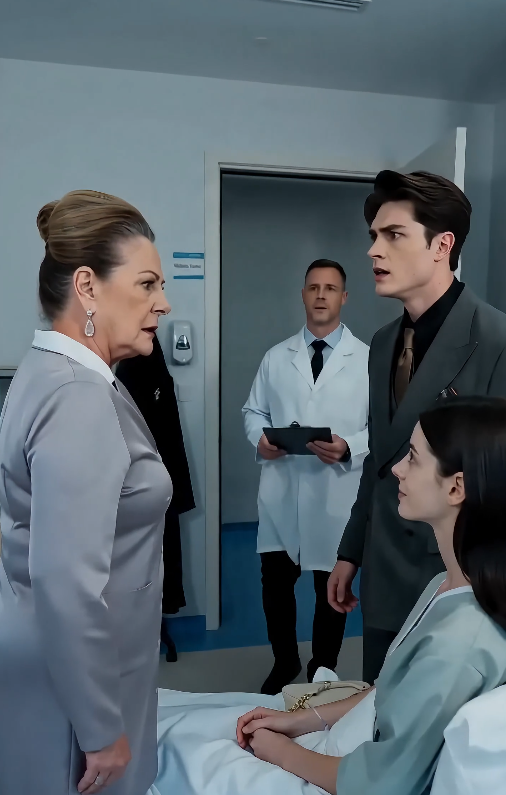
The hospital room went silent when the doctor placed the surgery bill on the bed and revealed the truth.
Mark Bennett’s mother had just pushed his wife away from the VIP bed as if she were a stranger begging for attention.
Mark lay against white pillows, pale but arrogant, his chest wrapped after the emergency surgery that had nearly killed him.
His wife, Rachel, stood near the foot of the bed in a simple gray sweater, her hair tied back, her eyes swollen from three nights without sleep.
She had not gone home.
She had not eaten properly.
She had signed forms, begged surgeons, called banks, and sold the last piece of her dead father’s inheritance before dawn.
But Mark looked at her like she was dirt on the hospital floor.
“You’re useless. Even my bills are paid by my family.”
Rachel’s fingers tightened around the folder in her hand.
“Are you sure about that?”
His mother, Evelyn Bennett, stepped between them and shoved Rachel away from the bed.
“Get out before real family arrives.”
Rachel did not fall.
She only looked at the woman who had hated her from the first day because she came from a small house, wore no diamonds, and married Mark before his family could choose someone richer.
“I already signed everything.”
The door opened.
Dr. Carter walked in carrying the final invoice, the surgical approval file, and a sealed financial receipt.
He looked at Mark.
Then at Evelyn.
Then at Rachel, whose hands were trembling but whose face had gone calm.
“Your wife sold her inheritance to save your life.”
Mark’s mouth opened, but no sound came.
Rachel placed a second folder on the blanket beside the bill.
It was not another medical form.
It was a divorce petition.
Three days earlier, Mark Bennett had collapsed in the marble lobby of his company headquarters.
He was thirty-seven, successful, handsome, and loved by people who only saw him in tailored suits.
He had been arguing with Rachel on the phone when the pain began.
She had asked him to come home for dinner.
He had told her meetings mattered more than her lonely little routines.
Then his voice had cracked.
The phone hit the floor.
Rachel heard shouting through the receiver.
She heard someone say ambulance.
She was at the hospital before his mother arrived.
She was there before the board members.
Before the lawyers.
Before the private nurse Evelyn tried to hire for appearance.
The surgeon told Rachel that Mark needed an immediate cardiac procedure.
The hospital needed financial authorization because Mark’s private insurance had lapsed during a corporate restructuring he had never bothered to tell Rachel about.
His family accounts were frozen because Mark and his mother had tied too much of their wealth into a risky acquisition.
Evelyn promised money was coming.
It did not come.
Mark’s brother did not answer.
His business partner sent flowers instead of funds.
The bank rejected the emergency transfer because signatures were missing.
The surgeon waited as long as he could.
Rachel stood in the hallway, listening to machines, footsteps, and the sound of her marriage being stripped down to what actually mattered.
She took out her phone and called Mr. Alvarez, the attorney who managed the only thing her father had left her.
A small lakeside property in Vermont.
Her father had built the cabin with his own hands after Rachel’s mother died.
It had peeling blue shutters, a crooked porch, and the maple tree where Rachel once carved her initials as a child.
She had refused to sell it through years of rent pressure, unpaid bills, and Mark’s insults about sentimental poverty.
It was the last place in the world where she still felt like someone’s beloved daughter.
At 2:16 a.m., Rachel sold it.
At 2:39 a.m., the emergency payment cleared.
At 2:44 a.m., Dr. Carter walked into the operating room.
At sunrise, Mark was alive.
Rachel sat outside the ICU with her father’s old key in her palm, though it no longer opened anything that belonged to her.
She did not cry then.
Shock had made her dry-eyed.
She only kept thinking that love should not always require proof written in loss.
When Mark woke, he asked where his mother was before he asked where Rachel was.
Rachel told herself he was medicated.
When Evelyn arrived, she took control of the room as if she had been the one making decisions all night.
She ordered fresh flowers.
She complained about the nurses.
She told Rachel to change out of her cheap sweater before visitors came.
Rachel said nothing.
She was too tired for class war beside a hospital bed.
By the second day, Mark was stable enough to be moved into a VIP suite.
Evelyn posted a carefully cropped photo online thanking family support and excellent medical care.
Rachel’s name was not mentioned.
Mark did not correct it.
That was the first crack that went all the way through.
On the third morning, Evelyn brought Mark’s relatives into the room.
They arrived with designer coats, fruit baskets, and theatrical concern.
One aunt said Mark was lucky to have a strong family behind him.
A cousin joked that Rachel looked like one of the night nurses.
Mark laughed weakly.
Rachel looked at him.
The laugh was small.
But it told the truth.
Evelyn then began discussing recovery plans as if Rachel were not there.
She said Mark should move into the family estate for six weeks.
She said Rachel’s apartment was too depressing.
She said Rachel did not know how to care for someone important.
Rachel finally spoke.
She said Mark was her husband.
The room chilled.
Mark turned his head on the pillow and looked at her with irritation.
Not gratitude.
Not shame.
Irritation.
That was when he said it.
“You’re useless. Even my bills are paid by my family.”
The words landed harder than any slap.
Rachel remembered the first year of marriage, when Mark still came home early and ate burnt pasta with her on the kitchen floor.
She remembered the promises he made before the money grew, before Evelyn’s contempt became his second voice.
She remembered believing that if she loved him patiently enough, he would remember the man he had been.
Now she understood that some people do not forget love.
They trade it for comfort.
“Are you sure about that?”
Evelyn pushed her then.
Not hard enough to injure.
Hard enough to declare territory.
“Get out before real family arrives.”
Rachel looked at Mark.
He did not defend her.
He did not even look embarrassed.
That silence became the final signature her heart needed.
“I already signed everything.”
Evelyn thought Rachel meant hospital discharge papers.
Mark thought she meant consent forms.
Only Rachel knew she meant the sale of her father’s cabin, the transfer that saved his life, and the divorce papers she had signed in the hospital chapel at dawn.
When Dr. Carter entered, he was not dramatic.
He had seen too much pain to enjoy exposing people.
But he had also watched Rachel sit outside surgery holding an old key like a prayer.
He had watched her sign away something priceless because no one else would move fast enough.
He set the documents down carefully.
“Your wife sold her inheritance to save your life.”
The relatives stopped whispering.
Evelyn’s face changed first with disbelief, then calculation, then shame she tried to bury beneath anger.
Mark stared at the bill.
The amount was enormous.
The receipt showed Rachel’s name.
Not Evelyn’s.
Not the Bennett family trust.
Not the company.
Rachel Anne Bennett.
Formerly Rachel Anne Moore.
Her father’s property settlement had been liquidated under emergency authorization.
Mark reached toward the papers, but his hand trembled.
For the first time since waking up, he looked at Rachel as if she had become visible.
She placed the divorce folder beside the medical bill.
The two documents looked almost identical from a distance.
One had saved his body.
The other saved her life.
Evelyn recovered enough to speak first.
She said Rachel was being emotional.
She said divorce talk was cruel while Mark was recovering.
She said good wives did not abandon sick husbands.
Rachel almost smiled.
Not because anything was funny.
Because the woman who had pushed her away from the bed was suddenly defending marriage as soon as marriage protected her son.
Rachel picked up her bag.
Inside was her father’s key, her phone, and nothing else from the Bennett life she intended to keep.
Mark finally tried to say her name.
His voice cracked.
Rachel stopped at the door but did not turn around immediately.
For years, she had waited for that tone.
The one that sounded like he needed her.
Now it came too late.
She turned only enough to see him.
He looked smaller against the pillows.
Not poor.
Not powerless.
Just exposed.
The room that had once treated Rachel like an intruder now looked at her as the only person who had acted like family.
Rachel told the nurse outside that Mark’s legal next of kin would need to be updated after the filing.
Then she walked down the VIP corridor.
No one stopped her.
At the elevator, her hands began shaking so badly she had to press the button twice.
When the doors closed, she finally cried.
Not for Mark.
Not fully.
She cried for the cabin.
For her father’s porch.
For the maple tree.
For the woman she had been when she thought sacrifice would one day be recognized as love.
That afternoon, Rachel went to the cabin one last time before the transfer completed.
The buyer had given her twenty-four hours to collect anything personal.
It was raining when she arrived.
The shutters were still blue.
The porch still leaned.
Inside, dust floated in the sunlight like memory.
Her father’s old fishing hat hung by the door.
A chipped mug sat near the sink.
The wallpaper in her childhood room had faded into pale flowers.
Rachel packed only a few things.
A photograph of her parents.
Her father’s recipe notebook.
A jar of lake stones she had collected at age nine.
On the kitchen table, she found a letter tucked inside the old family Bible.
It was addressed to her in her father’s handwriting.
He must have placed it there before he died, trusting she would find it when she needed the house most.
Rachel sat down slowly and opened it.
Her father wrote that a home is not wood, land, or walls.
It is the place inside yourself where no one is allowed to make you feel unwanted.
He wrote that if she ever had to lose the cabin to save a life, survive a storm, or choose herself, she should not confuse losing property with losing him.
He wrote that love should make her more herself, not less.
Rachel pressed the letter to her mouth and sobbed until the rain stopped.
For the first time since selling the cabin, she felt not forgiven.
Released.
The divorce became public faster than she expected.
The Bennett family tried to control the narrative.
Evelyn told relatives Rachel had abandoned Mark during recovery.
Mark said nothing for two weeks.
Then the hospital receipt leaked during a dispute over marital assets.
Suddenly, everyone knew.
The wife they called useless had sold her inheritance to keep him alive.
The family that claimed to pay for everything had paid for flowers.
Mark called Rachel every day after that.
She did not answer at first.
When she finally agreed to meet, it was in her attorney’s office.
Not their apartment.
Not the hospital.
Not anywhere memory could soften the truth.
Mark arrived thinner, slower, and less polished.
He apologized before sitting down.
He said he had been cruel.
He said he had been ashamed of how much he depended on his family’s image.
He said he let Evelyn’s contempt become normal.
He said he did not know Rachel had sold the cabin.
Rachel listened.
She believed he was sorry.
She also understood that sorry is not a bridge unless the person has already crossed the river of change.
Mark asked whether they could start over.
Rachel looked at him for a long moment.
Then she asked him what he would have done if Dr. Carter had not exposed the truth.
Mark lowered his eyes.
That answer was enough.
The divorce was finalized six months later.
Rachel did not ask for revenge.
She asked only for repayment of the medical funds through structured settlement, acknowledgment of the inheritance sale, and a clean separation.
Evelyn fought everything.
The judge did not enjoy her tone.
Mark eventually stopped his mother’s interference and signed.
It was the first decent thing he had done in a long time.
Rachel used part of the settlement to start again in a small apartment above a bakery.
It was not a cabin.
The floors creaked.
The windows rattled in winter.
But no one there called her useless.
She returned to school for healthcare administration, a dream she had postponed when Mark’s career became the center of their life.
She volunteered at the same hospital, not on the VIP floor, but in the financial assistance office.
She knew what panic looked like when money stood between a body and survival.
She helped families understand forms, emergency grants, charity funds, and patient rights.
She carried her father’s letter in her bag.
Some days, when a spouse cried over a bill, Rachel would touch the folded paper and remember that love does not have to destroy the person giving it.
Two years later, Dr. Carter invited Rachel to speak at a hospital fundraising event.
She refused at first.
She did not want to be the woman from the scandal.
Dr. Carter told her she would not be speaking about scandal.
She would be speaking about dignity.
So Rachel stood on a small stage in a navy dress and told the story without naming Mark.
She spoke about caregivers who sit unseen.
Spouses who sign forms at midnight.
Adult children who sell cars, jewelry, land, and heirlooms because love moves faster than bureaucracy.
She said hospitals should never allow money to become a weapon inside families.
After her speech, the hospital created the Moore Emergency Care Fund in honor of her father.
It helped cover urgent procedures when insurance, paperwork, or family delays threatened care.
Rachel donated the first check.
It came from Mark’s repayment.
She wrote her father’s name on the memo line.
Thomas Moore.
The man who built a cabin and raised a daughter who learned to build herself again.
Years passed.
Mark recovered physically, but his life changed.
His company removed him from executive leadership during the financial scandal.
Evelyn’s social circle shrank after people learned what had happened in the hospital room.
Mark entered counseling.
He began volunteering quietly at cardiac rehabilitation events.
Rachel heard this through others.
She did not seek it.
She was glad if he became better.
She did not need to be the reward for his improvement.
One autumn afternoon, Rachel returned to Vermont.
The new owner of the cabin had written to her after finding the carved initials in the maple tree.
She was a retired teacher named Mrs. Collins.
She had read about the Moore Fund and realized the cabin had belonged to Rachel.
She invited Rachel to visit whenever she needed.
Rachel almost declined.
Then she went.
The shutters were still blue, freshly painted this time.
The porch had been repaired but not replaced.
The maple tree still stood.
Rachel placed her hand over the initials she had carved as a child.
For once, grief did not knock her down.
It stood beside her like an old companion.
Mrs. Collins brought tea to the porch.
She told Rachel the cabin felt loved before she ever moved in.
Rachel smiled.
She realized then that her father had been right.
A home could leave your name and still remain part of you.
The next spring, Rachel bought a smaller house near the hospital.
It had no lake view.
No maple tree.
But it had a little garden and enough sunlight for basil on the kitchen windowsill.
She hung her parents’ photograph in the hallway.
She placed the old cabin key in a shadow box beneath her father’s letter.
Under it, she wrote one sentence for herself.
I did not lose myself to save him.
On the fifth anniversary of the surgery, Rachel received a letter from Mark.
It was handwritten.
Short.
He thanked her for saving his life.
He apologized for making her prove her worth through sacrifice.
He wrote that he had finally paid the last installment of the medical debt.
He said he understood she owed him no response.
Rachel read the letter once.
Then she placed it in a file marked closed.
That evening, she attended the hospital’s annual report meeting.
The Moore Fund had saved seventy-three patients from delayed emergency care.
Seventy-three people had gone into operating rooms because money arrived in time.
Rachel looked at the number and thought of the cabin.
The porch.
The lake.
The tree.
She thought loss had become something larger than grief.
It had become doors opening for strangers.
After the meeting, a young woman approached her with a baby asleep against her shoulder.
Her husband had received emergency surgery through the Moore Fund.
The woman did not know Rachel’s full story.
She only knew the fund existed.
She thanked her with tears in her eyes.
Rachel touched the baby’s tiny sock and felt something inside her finally loosen.
The cabin was gone.
The marriage was gone.
The woman Mark had called useless was gone too.
In her place stood someone quieter, stronger, and impossible to dismiss.
He called his wife useless.
Then the doctor revealed whose money saved him.
May you like



But the real ending was not the divorce papers on the hospital bed or the shame in his family’s eyes.
The real ending was that Rachel stopped begging to be valued by people who only understood sacrifice after it was exposed, and she turned the inheritance she lost into a fund that saved lives without ever asking anyone to prove they were worthy first.







